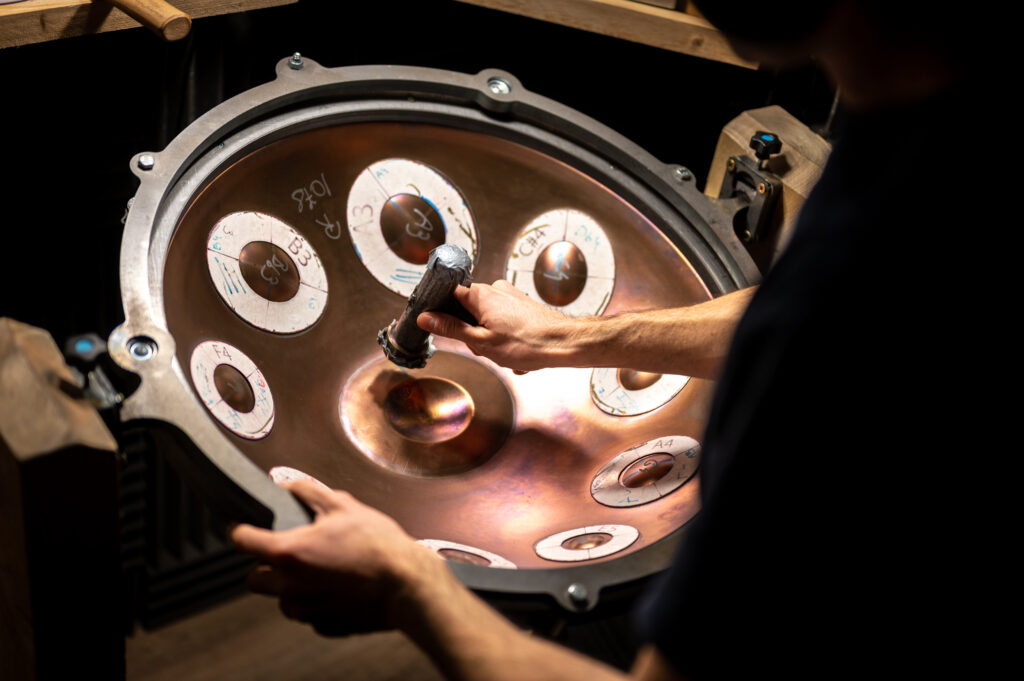
The process, methods, and techniques of handpan crafting: general and specific aspects in the MAG Manufactory
What is premium, world-class handpan making and how does it differ from the mass-produced, lower quality handpans? What parameters can help you choose the best handpans?
In this article, you’ll learn everything essential about handpan crafting, and we’ll give you a small glimpse into the MAG Instruments Manufactory. Read on to discover what makes a handpan top-quality!
The crafting of a handpan must be performed with meticulous attention, often as though under a magnifying glass, because precision at the millimeter and even tenth-of-a-millimeter level is crucial.
A minor flaw or slight deviation in the force used can significantly affect the sound quality. That’s why creating a handpan demands intense concentration and precision to ensure that the instrument produces a crystal-clear and accurate tone (free of any dissonance), remains in tune, has a balanced sound, and is also visually appealing.

Even a single misplaced strike can ruin weeks of work in an instance, so it takes years to acquire the necessary routine for crafting.
Since the work is precise, exhausting, and physically demanding, both experimentation and creation take time and energy, with a high risk of error.
Not everyone can become a handpan maker, as the craft demands both patience and resilience. The work involves hours of repetitive tasks and long periods of isolation in the soundproof tuning room.
It requires exceptional dedication, precision, and a deep understanding of the instrument—skills that only a handful of artisans truly master. To make things even more challenging, many struggle to turn handpan crafting into a sustainable business.
High-end handpans are meticulously handcrafted, requiring extensive experimentation before a maker can produce a “nearly perfect” instrument.
If a single artisan completes the entire process alone, it can take 4–6 months to finish just one handpan. However, in teams of 5–10 or more, production time can be significantly reduced—potentially by half.
The time required depends on factors such as the handpan’s complexity (number of notes), available resources, the techniques used, and the level of craftsmanship and attention to detail the maker invests in the process.
Whether crafted solo or in a team, creating a beautifully resonant handpan demands hundreds of hours of work. For this reason, we consider handpan making an art form in its own right.

Most aspects of a handpan’s sound are easy to recognize, even for beginners. If you’ve compared different handpans, you can likely tell when an instrument is out of tune, when notes clash or sound unpleasant, or when a scale lacks harmony and musicality.
Unlike the meticulously crafted handpans, cheaper versions, often from China, do not involve the same level of care and expertise in their creation. The makers usually lack experience and high levels of standards, and these inexpensive handpans are typically not properly tuned, resulting in a sound that is highly discordant and unpleasant to the ear.
Additionally, they are not durable and tend to go out of tune quickly. This is a significant issue, as tuning a handpan requires a skilled tuner, which is rather hard to come across. In the industry, nobody is eager to undertake tuning a handpan ordered from China, as oftentimes, it is a mission impossible.
Although a significant portion of handpans are handcrafted, mass production “assembly line” methods exist in China, leading to extremely low-quality outcomes. The shaping of the instrument is becoming more and more mechanized, tuning—the heart and soul of the instrument— still requires the expertise of a skilled craftsman.
We tested the cheapest handpan from China and compared it to a MAG handpan. These can be purchased for around 600 euros, but unfortunately, in most cases, the playing experience is so unenjoyable that they quickly end up stored away in a closet.
Naturally, there is a middle ground between premium and cheap handpans. For beginners and hobby musicians, a mid-range instrument is the way to go.
You receive a handpan as close to perfection as possible, crafted with love, passion, care, and meticulous attention to detail. MAG Instruments handpans are made by musicians and experienced instrument makers, tuners, ensuring they produce crystal-clear sound, providing you with years of joyful music-making.
We craft our instruments with maximum precision, and only nearly perfect handpans pass the quality control, receiving the MAG certification and branding. Each completed instrument is evaluated individually by sound, overall harmony, and visual parameters.
Furthermore, the entire production process—from raw materials, shaping, and tuning expertise—is conducted at a superior quality, meticulously aligned with the high-end handpan market standards of today.
What sets us apart is our underlying awareness, precision, attention to detail, and our passion for the craft and handpans. Our primary goal is to make the world a better and more lovable place through the meditative, magical sound of handpans.
Nowadays, handpans are typically made from 1.0 – 1.1 – 1.2 mm thick steel alloys, primarily AISI 430 and AISI 441, whereas most makers previously used DC04 nitrided steel shells.
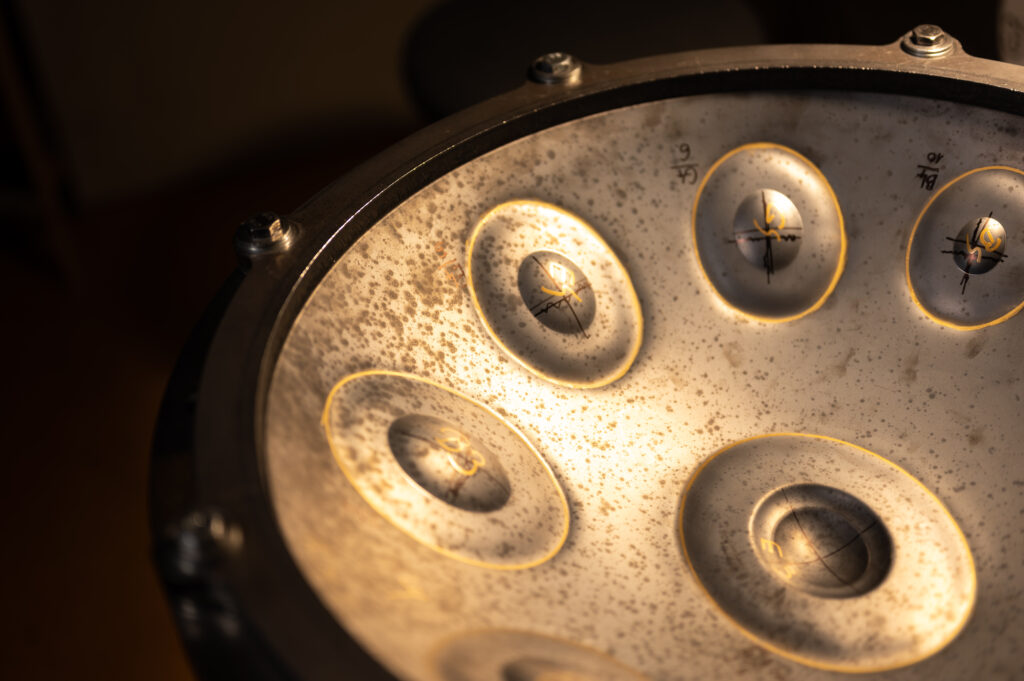
Each maker may specialize in specific steps of the handpan making process, or handle the entire process themselves. By now, at MAG Instruments everyone is specialized in their work area, so each step has its own “responsible expert”, though initially, our current master tuners and shapers were hand crafting every phase independently by themselves.
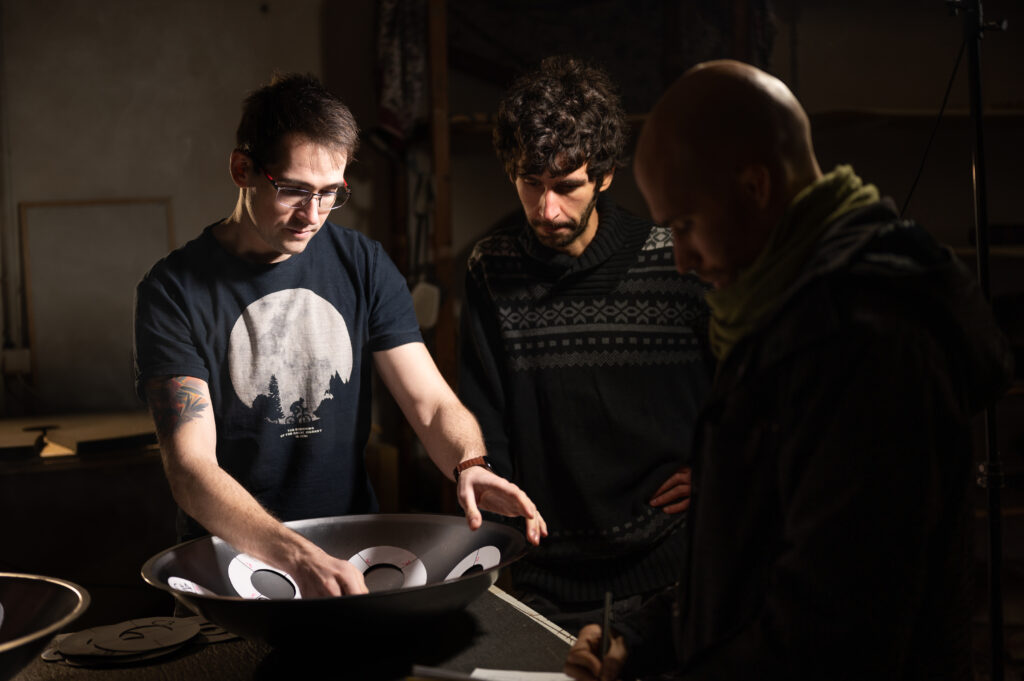
0. Sourcing and Manufacturing of Materials